
If you love spending nights under the stars, learning how to pack out properly is one of the most important skills you can develop. Packing out isn’t just about carrying a heavy backpack; it’s the commitment to remove everything you brought in—and sometimes more—so you leave no trace at campsites. Done right, it protects wildlife, keeps water sources clean, and preserves wild places for future visitors.
Below is a practical, people-first guide and checklist to help you pack out like a pro, whether you’re car camping, backpacking, or heading into remote wilderness.
What Does “Pack Out” Really Mean?
In outdoor ethics, “pack out” means:
If you brought it in—or created it—you take it back out.
That includes:
- All trash (even tiny bits)
- Food waste and scraps
- Hygiene products
- Some or all human waste, depending on location rules
- Gear, repair leftovers, and micro-trash like cut cord or tape
The principle is simple, but putting it into practice can be surprisingly challenging when you’re tired, dirty, and ready to go home. A solid pack out routine solves that.
Why Packing Out Matters So Much
Leaving no trace isn’t just about aesthetics. Failing to pack out properly has real impacts:
- Wildlife health and behavior: Animals that access human food and trash can become dependent, aggressive, or ill. Many are eventually relocated or killed as “problem animals.”
- Water contamination: Food scraps, soap, and waste can introduce bacteria and chemicals into streams and lakes, affecting ecosystems and downstream drinkers.
- Campsite degradation: Trash and leftover food encourage rodents and insects and make sites less pleasant—and sometimes unsafe—for other campers.
- Trail closures and regulations: Heavy misuse often leads to stricter rules, permits, or closures for everyone.
The Leave No Trace Center for Outdoor Ethics lists proper waste disposal and trash management as a core principle of responsible recreation (source). Your pack out habits are a direct way to help.
Pre-Trip Planning: Make Packing Out Easier Before You Leave Home
A smart pack out starts long before you arrive at the campsite. You can dramatically reduce what you need to carry out by planning ahead.
1. Reduce Packaging at Home
- Repackage food from bulky boxes into reusable containers or bags.
- Remove excess cardboard and plastic.
- Pre-measure ingredients so you don’t bring extra you’ll throw away.
2. Choose Low-Waste Foods
- Opt for foods with minimal, compressible packaging (e.g., tortillas instead of bulky bread loaves).
- Favor dehydrated or dry foods that leave little behind.
- Avoid single-use condiment packets when possible; bring small refillable bottles instead.
3. Pack Dedicated “Trash Systems”
Before you go:
- Pack at least one heavy-duty trash bag per group, plus a backup.
- Bring several quart or gallon resealable bags for food scraps and hygiene waste.
- Add a small, sealable hard container (like an old peanut butter jar) for especially smelly or messy trash.
Planning ahead means you won’t be improvising with ripped bags or loose trash at the end of your trip.
The Complete Campsite Pack Out Checklist
Use this checklist during camp teardown or before leaving each campsite. Move slowly and look intentionally—this is when the tiny things get missed.
1. Food and Cooking Area
- Stove and fuel canister
- Cook pot, lid, and utensils
- Cutting board or camp knife
- Food bags and containers
- Leftover food (either eaten, properly stored, or packed out)
- Micro-trash:
- Food wrappers and corners
- Tear-off tops from dehydrated meals
- Instant coffee and drink mix packets
- Twist ties, rubber bands, and bread tags
Scan your eating and cooking zone carefully. Food scraps—even rice grains or pasta bits—should be picked up and packed out. Don’t toss any food into the fire ring; many items don’t burn completely and can attract animals.
2. Trash and Recycling
- Main trash bag, closed and checked for leaks
- Separate sealed bag for recyclables (if you have space and know you can recycle at home or in town)
- Latent trash:
- Bits of tape
- Broken zipper pulls
- Cans or bottles
- Foil, including the inner linings of snack bars or instant meals
If you must carry trash on the outside of your pack, double-bag it and secure it so it can’t fall off on the trail.
3. Hygiene and Bathroom Waste
Hygiene items are some of the most commonly left behind. Your pack out checklist should always include:
- Used toilet paper (if local rules require or conditions are delicate)
- Menstrual products (pads, tampons, wrappers, applicators)
- Wipes (all are microplastics; none are “biodegradable” in a useful timeframe)
- Dental floss
- Cotton swabs or makeup pads
Use a dedicated, opaque, sealable bag or container for these items for privacy and odor control. Mark it so no one opens it accidentally.
4. Human Waste: Know When to Pack It Out
Depending on where you camp:
- Some areas require packing out all human waste using wag bags or portable toilets.
- Others allow catholes if done properly (6–8 inches deep, 200 feet from water, trails, and camps).
Check regulations for your exact destination. If wag bags are required:
- Each person should carry their own kit.
- Know how to use and seal them before the trip.
- Pack them in a sturdy outer bag or container separate from food.
Never leave wag bags, dog waste bags, or any waste kits at trailheads or under rocks—if you carry it in, you must carry it out.
Micro-Trash: The Tiny Stuff That Does Big Damage
Micro-trash is small but harmful and often overlooked. As you pack out, hunt for:
- Corners of energy bar wrappers
- Cigarette butts and filters
- Twist tops and pull tabs
- Bottle caps
- Pieces of foam or insulation
- Torn gear bits: webbing, cord, Velcro, or patches
These are easily ingested by animals and persist in the environment for years. Do a “micro-trash sweep” before you leave camp.
Packing Out Greywater and Soap Use
Many campers underestimate the impact of dishwater and soap. Your pack out ethic should include smart water practices:
- Use as little soap as possible, and choose biodegradable options.
- Strain greywater (dishwater) with a small screen or bandana to remove food particles.
- Pack out those food particles with your trash.
- Disperse greywater at least 200 feet from water sources by broadcasting it over a wide area, not dumping it in one spot.
- Never wash dishes or yourself directly in streams or lakes.
While you’re not literally packing out the water, you’re ensuring that what goes into it has minimal impact.
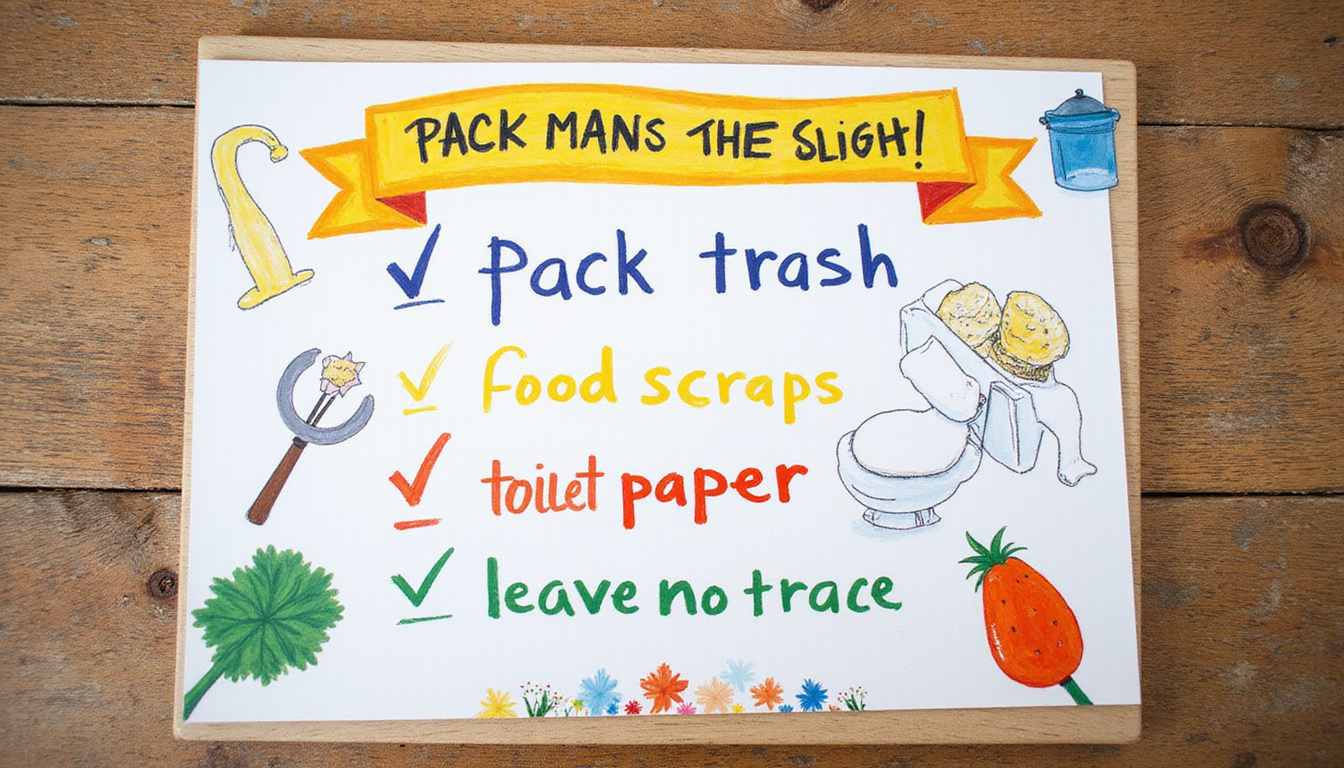
Leave No Trace Pack Out Routine: Step-by-Step
To make this easy to remember, build a simple routine you follow every time you break camp:
- Trash Consolidation
- Gather all trash bags from around camp.
- Compress and combine them into one sturdy, sealed bag.
- Food and Cooking Sweep
- Inspect under logs, rocks, and your cooking area.
- Check the fire ring for unburned trash or foil; pack it out.
- Tent and Sleeping Area Check
- Look around your tent footprint and sleeping area for micro-trash.
- Check under your sleeping pad and inside the tent.
- Bathroom Area Review
- Confirm you’ve removed all hygiene waste and containers.
- Double-check any catholes follow local guidelines; disguise the site.
- Final 360° Walk-Through
- Walk a wide circle around camp.
- Scan for anything unnatural: string, paper, plastic, food, or gear.
- Trail Check
- As you hike out, occasionally glance back to see if anything fell off your pack.
Repeat this at every campsite and rest stop. A consistent behavior pattern is what turns the pack out principle into a habit.
Gear That Makes Packing Out Easier
You don’t need fancy equipment to pack out responsibly, but a few items help:
- Heavy-duty trash bags: Contractor or thick garden bags resist tears.
- Resealable freezer bags: For smelly items and food scraps.
- Hard-sided odor-resistant container: An old screw-top jar or purpose-built trash container keeps smells down.
- Small stuff sack or dry bag: Designated as the “trash bag” on the outside of your pack.
- Mini trowel: For proper catholes where allowed.
- Lightweight gloves: Useful if you’re picking up other people’s trash.
Label your trash system clearly so no one in the group mistakes it for food storage.
Teaching the Pack Out Mindset to Your Group
If you camp with friends, family, or beginners, building a shared pack out culture helps keep everyone accountable:
- Set expectations before the trip: “We leave this place cleaner than we found it.”
- Assign rotating roles: one person does final trash sweep, another checks kitchen area, another checks bathroom area.
- Model the behavior: Pick up trash even if it isn’t yours.
- Celebrate clean camps: Take a quick moment to notice how the place looks when you leave.
When kids are involved, turn pack out into a game: who can find the most micro-trash near camp? Offer small rewards or treats.
FAQ: Pack Out Basics
1. What does “pack out all trash” mean when camping?
“Pack out all trash” means you must carry out every piece of waste you create or bring in, including food wrappers, leftover food, hygiene products, micro-trash, and sometimes human waste. Nothing should be left at the campsite, in fire rings, or in pit toilets if local rules say to pack it out instead.
2. How do you pack out toilet paper and hygiene waste?
Use a small, opaque, resealable bag or hard-sided container. After using toilet paper, wipes, or menstrual products, place them directly into the container and seal it. At the end of your trip, dispose of the contents in a regular trash bin at home or in town—never bury or burn hygiene waste, even if it claims to be biodegradable.
3. What should I use for a backpacking pack out system?
For backpacking, a simple pack out system includes: one heavy-duty trash bag, several resealable freezer bags for food and hygiene waste, and possibly a small hard-sided jar for the smelliest items. Attach the main trash bag securely to your pack or place it inside with other gear. Always double-bag if there’s a risk of puncture.
Leave Wild Places Better Than You Found Them
Every time you step off the trail, you leave a mark—good or bad. Adopting a strong pack out habit is one of the most powerful ways to make that mark positive. With a bit of planning, a simple checklist, and a commitment to carrying everything back out, you help protect wildlife, preserve water quality, and keep campsites beautiful for everyone who comes after you.
On your next trip, put this pack out checklist into practice. Print it, save it to your phone, or share it with your camping group—and challenge yourselves to leave every campsite looking like you were never there at all.
Junk Guys Inland Empire
Phone: 909-253-0968
Website: www.mediumspringgreen-snake-472026.hostingersite.com
Email: junkguysie@gmail.com
